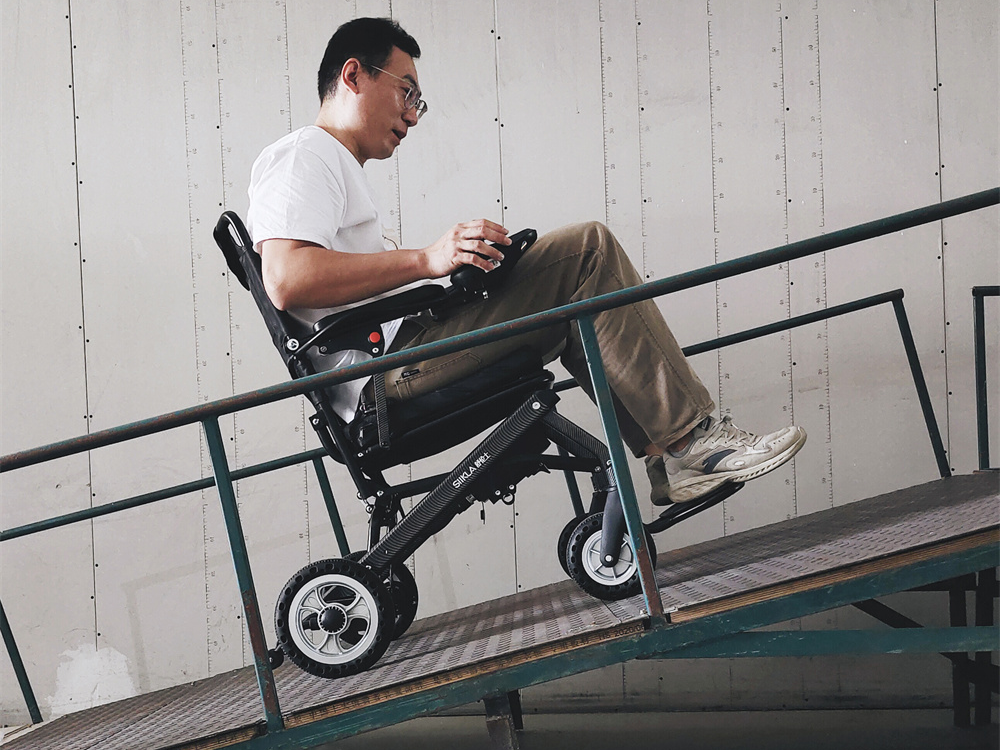
Die keuse van die regte rolstoel is nie net oor ondersteuning en stabiliteit nie—dit gaan ook oor hoe maklik dit in jou daaglikse lewe, huis en reisaanbeplanning pas. Die manier waarop ’n rolstoel vou, maak ’n werklike verskil in berging, vervoer en gerief. Hier is ’n duidelike riglyne vir die twee mees algemene voustyle, saam met ons aanbevole modelle.
Links-Regs-Vourolstoele (Sy-vou)
Die beste vir: Nou ruimtes, regopberging en alledaagse gebruik by die huis.
Links-reg (sy-vou) rolstoele vou ineen deur die linkerkant en regterkant saam te bring. Wanneer dit gevou is, word dit aansienlik nouer terwyl dit nog baie van sy hoogte behou. Dit maak dit ideaal as jy die volgende nodig het:
- Om die rolstoel in ’n nou gangkas, tussen meubels of teen ’n muur te berg
- Om deur nou deure of nou binne-ruimtes te beweeg nadat dit gevou is
- Om die eenheid regop in ’n hoek te hou sonder om baie vloerwydte te beslaan
- Om dit hoofsaaklik by die huis of in ondersteunde-woningomgewings te gebruik waar wydte ’n groter beperking is as lengte
Ons Model 9183 – Links-Regs-vourolstoel
Ontwerp vir betroubare daaglikse ondersteuning met ’n skoon, praktiese vou:
Die 9183 bied ’n stabiele, ruim sitposisie en ’n eenvoudige syvou wat die eenheid in breedte kompakt hou—ideaal vir gebruikers wat maklike huisopberging en ’n stewige alledaagse loopstoel waardeer.
Voor-agter-vouloopstoele (voor-agter-vou)
Geskik vir: Reis, motorbakke en maksimum kompaktheid tydens opberging.
Voor-agter-vouloopstoele vou saam deur die voor- en agtergedeeltes nader aan mekaar te bring. Dit verkort die totale lengte drasties en skep ’n meer koffiekasagtige pakket wat makliker is om in ’n motorbak in te lig, onder ’n bed te berg of op reise mee te neem. Kies hierdie styl as jy:
- Baie gereeld met ’n motor, trein of vliegtuig reis
- Die kleinst moontlike voetspoor nodig het wanneer die loopstoel nie gebruik word nie
- Dit onder ’n bed, in ’n kas of in ’n beperkte motorbak wil berg
- ’n Voustyl verkies wat op verminderde lengte eerder as verminderde breedte fokus
Ons Model 9185 – Voor-agter-vouloopstoel
Gebou vir draagbaarheid sonder om gemak of sterkte te vergewe:
- Aluminiumlegering-raam
- 8-duim PU-massiewe voor- en agterwiele
- Netwerk-katoen sitplekrugkussing
- Sitplekhoogte 510 mm | Sitplekdiepte 360 mm | Sitplekbreedte 430 / 460 mm (opsioneel)
- Handvashoogte 770 / 930 mm
- Draai-radius 600 / 800 mm
- Handrem
- Maksimum las: 100 kg
- Ontvoude afmetings: 870 × 570 × 920 mm
- Vou-dimensies: 580 × 320 × 810 mm
- Netogewig: 9,7 kg | Bruto gewig: 12,1 kg
Die 9185 vou in ’n meer kompakte lengte-profiel, wat dit veral gerieflik maak vir reis en noue bergingsruimtes, terwyl dit steeds ’n gerieflike sitplek en gladde mobiliteit bied.
Vinnige vergelykingsgids
| Kenmerk | 9183 (Links-reg vou) | 9185 (Voor-agter vou) |
|--------------------------|-----------------------------|---------------------------------|
| Voustyl | Sywaarts (smaller breedte) | Lengtewys (korter lengte) |
| Ideale berging | Dun kasse, regop hoeke | Motorbagasiekompartemente, onder beddens, reis |
| Sitbreedte | 440 mm | 430 / 460 mm (opsioneel) |
| Sit hoogte | 530 mm | 510 mm |
| Draai-radius | 700 / 950 mm | 600 / 800 mm |
| Gewig-inligting | Netto 10 kg | Netto 9,7 kg |
| Beste vir | Tuis- en daaglikse binneskouse gebruik | Reis- en kompakte berging |
Beide modelle deel dieselfde kernsterktes: duursame aluminiumkonstruksie, stewige 8-duim PU-wielle, betroubare handremme, lugdorings sitplekke van materiaal, en ’n gewigkapasiteit van 100 kg. Die hoofverskil lê in hoe en waar jy die rolstoel wil berg of vervoer.
Aanbeveling
- Kies die 9183 as jou prioriteit daaglikse tuisgebruik is en as jy die rolstoel in nou vertikale ruimtes wil berg.
- Kies die 9185 as jy gereeld reis of die mees kompakte gevoude lengte vir motors en beperkte bergingsruimtes benodig.
Watter een jy ook al kies, beide rolstoele is ontwerp om gebruikers groter onafhanklikheid, gemak en gemoedsrus te bied—of dit nou tuis of onderweg is.

Welkom by Sulenz, China se toonaangewende rolstoelvervaardiger. Ons bied hoogste-kwaliteit en koste-effektiewe mobiliteitsoplossings insluitend elektriese rolstoele, handrolstoele, rollators en mobiliteit scooters.
Gebou A4, No.17 Shabianstraat, Fakkelontwikkelingsone, Zhongshanstad, Guangdong-provinsie, China
Auteursreg © Zhongshan Sulenz Intelligent Technology Co., Ltd. Alle regte voorbehou - Privaatheidsbeleid-Blog

 EN
EN
 Warm Nuus