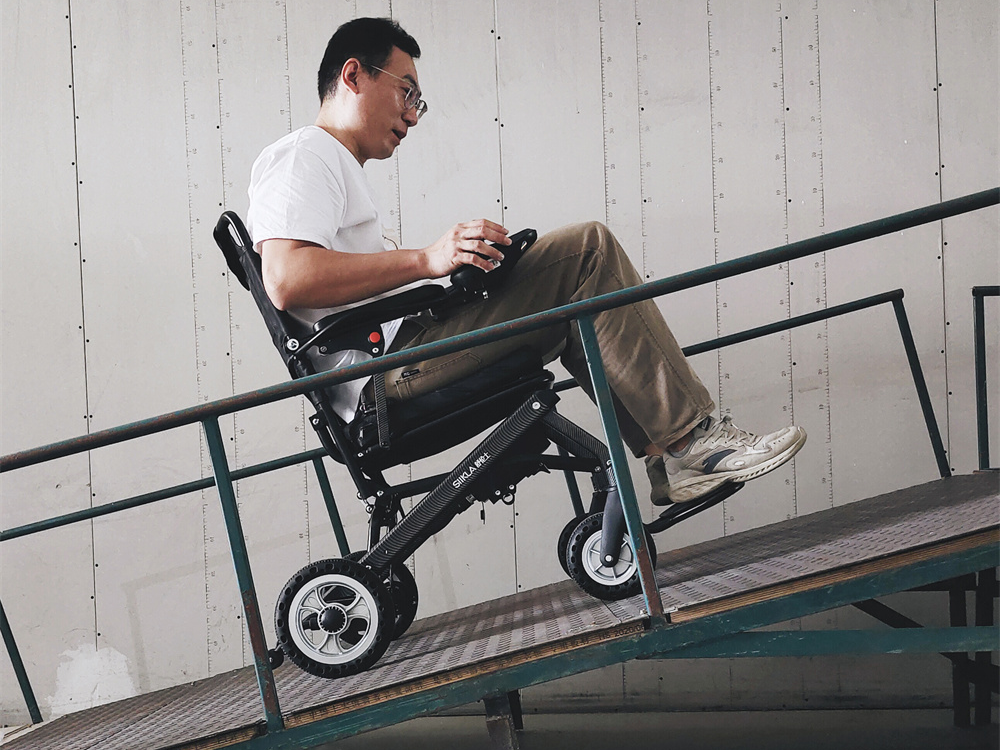
At first glance, both rollators (four-wheeled walkers) and manual wheelchairs are mobility devices that roll on four wheels. Yet their wheel-size strategies are fundamentally different. Most rollators use the same diameter for front and rear wheels, while wheelchairs almost always feature noticeably smaller front casters than rear wheels. This difference is not arbitrary — it stems from the distinct ways each device is propelled, steered, and used.
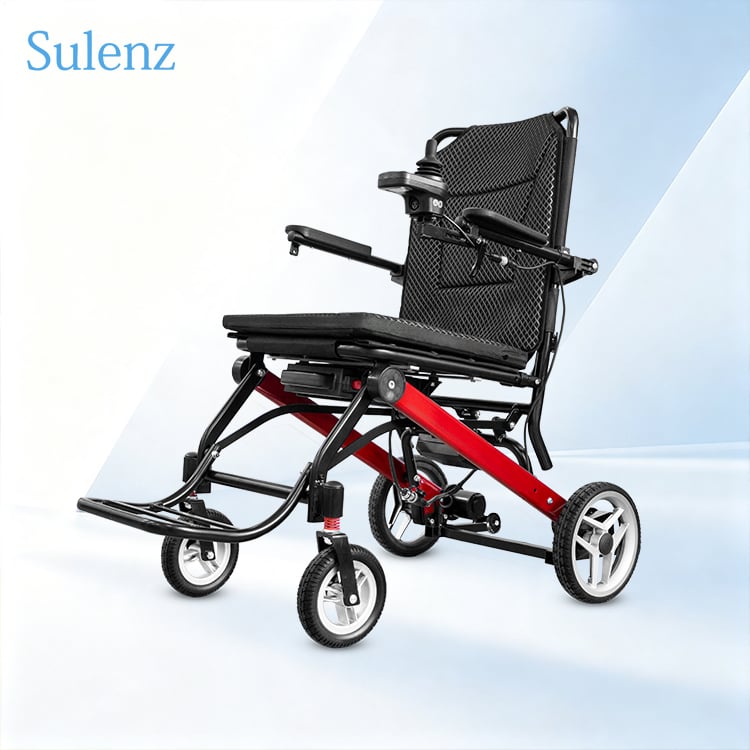
A wheelchair is a seated mobility system. Whether the user self-propels via handrims or an attendant pushes from behind, the large rear wheels serve as the primary drive wheels. Their greater diameter reduces rolling resistance, increases the distance covered per push, improves obstacle clearance, and provides better leverage and stability under the user’s weight. The front wheels, by contrast, function mainly as casters: they must swivel freely to allow tight turns and directional changes. Keeping them smaller minimises the turning radius, reduces the swing arc, lowers the front end of the chair, and makes indoor manoeuvring far more agile.
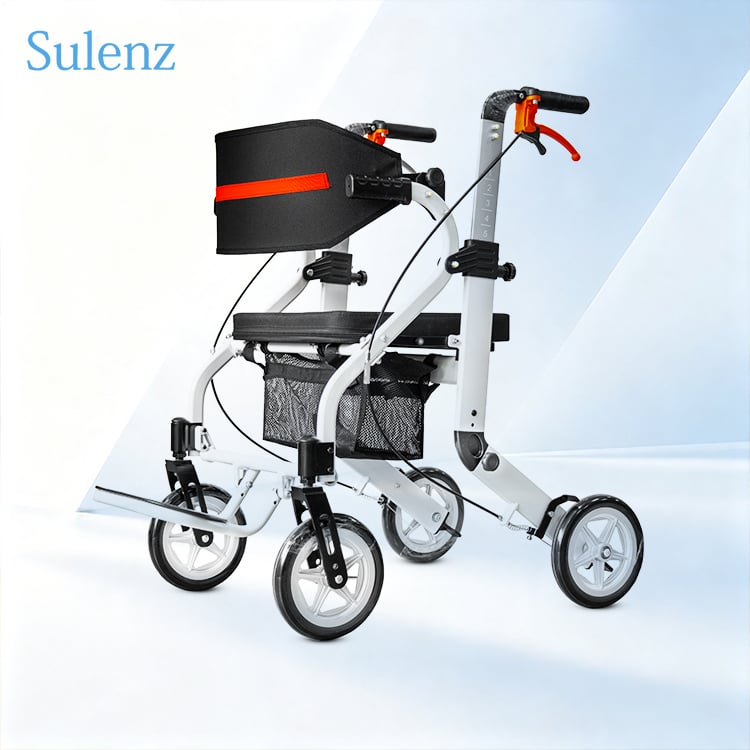
A rollator, however, is a walking aid. The user remains upright and supplies the propulsive force by walking. There are no handrims and no need for large drive wheels to generate torque or long roll-out. All four wheels simply need to roll smoothly and support the frame while the user walks. Using identical front and rear diameters creates a balanced, symmetrical rolling platform that tracks predictably in a straight line and responds consistently to the user’s body movements.
In a wheelchair the front casters must pivot quickly under a relatively low load. Smaller casters achieve a tighter turning circle and faster response — essential for navigating doorways, bathrooms and crowded indoor spaces. Larger front wheels would increase the overall length of the chair and make it feel sluggish in tight environments.
On a rollator the priority is steady, predictable support while the user walks. Equal-sized wheels distribute contact forces evenly, improve directional stability, and make the device less prone to tipping when the user leans or turns. Because the user is walking rather than sitting and pivoting the device sharply, the slightly larger turning radius of uniform wheels is rarely a practical disadvantage. In fact, the consistent wheel size helps the rollator “track” more naturally with the user’s gait.
Wheelchairs deliberately pair large rear wheels (strong obstacle-crossing ability) with smaller front casters (agility). The large rear wheels can roll over many obstacles once the front casters have been lifted or cleared, often with a wheelie or attendant assistance.
Rollators face obstacles with all four wheels under similar conditions. Matching front and rear diameters ensures that the device rises and falls evenly rather than pitching forward or backward when one axle encounters a threshold or crack. Uniform wheels also simplify the design of brakes and locking mechanisms, which typically act on the rear wheels but benefit from consistent geometry across the frame.
Most of a wheelchair user’s weight rests over the rear axle. This allows the small front casters to remain lightly loaded so they can swivel freely without excessive friction or “caster flutter.” The large rear wheels carry the primary load and provide the necessary traction and stability.
A rollator’s weight distribution is more evenly shared because the user is standing and moving with the device. Equal wheels maintain balanced ground contact whether the user is walking straight, turning, or briefly resting on the seat. This symmetry is especially valuable for outdoor use on uneven pavements, where consistent behaviour in all directions enhances user confidence.
| Aspect | Wheelchair | Rollator (Walker) |
|---|---|---|
| Primary propulsion | Large rear drive wheels | User’s walking force |
| Steering requirement | Fast, tight turns via small pivoting casters | Smooth directional response with body movement |
| Obstacle strategy | Large rear wheels + smaller front casters | Uniform wheels for even rise and fall |
| Turning priority | Minimum turning radius | Predictable tracking and stability |
| Weight bias | Predominantly over rear wheels | More evenly distributed |
| Typical wheel approach | Rear larger, front smaller | Front and rear the same size |
In essence, wheelchairs separate the functions of drive and steering, optimising each with different wheel sizes. Rollators integrate rolling support into a single, symmetrical system that matches the biomechanics of walking. The result is two purposeful design solutions: one prioritising efficient seated propulsion and indoor agility, the other prioritising balanced, stable support for an upright user. Understanding this functional difference explains why equal-sized wheels are the logical choice for rollators, while the classic “large rear, small front” configuration remains ideal for wheelchairs.

Welcome to Sulenz, China`s leading wheelchair manufacturer. We provide best-quality and cost-effective mobility solution including electric wheelchairs, manual wheelchairs, rollators and mobility scooters.
Building A4, No.17 Shabian Road, Torch Development Zone, Zhongshan City, Guangdong Province, China
Copyright © Zhongshan Sulenz Intelligent Technology Co., Ltd. All Rights Reserved - Privacy Policy - Blog

 EN
EN
 Hot News